North Africa
Morocco tour packagesWhere the desert meets the Atlantic
Four imperial cities, a blue town in the Rif and dunes you reach by camel — under nine hours from Dubai, and a country best crossed by road.
About Morocco
A country that rewards the long drive
Morocco is closer than it sounds. Casablanca is a little under nine hours non-stop from Dubai, and once you are on the ground you can cross from an Atlantic fishing port to a Saharan dune field without boarding another aircraft. Almost every trip here is a road trip, and the road is a large part of the point.
The imperial cities carry most of the history. Fes was founded in the eighth century and Fes el-Bali, its old medina, is still a working city of blind alleys, madrasas, tanneries and craftsmen’s workshops rather than a preserved quarter. Marrakech is the red one, founded by the Almoravids at the end of the eleventh century for the trade that arrived from the south. Meknes and Rabat hold the walls, gates and mausoleums of later dynasties, and the Roman town of Volubilis sits on its hillside just north of Meknes.
South and east of Marrakech the country changes completely. The High Atlas passes drop into the Dades and Todra valleys, where the gorge walls run over three hundred metres, and the road continues through Skoura’s palm groves and Kelaa M’Gouna, the rose town, to the edge of the sand at Merzouga. The last stretch is done by four-wheel drive and then by camel, and the night is spent in a camp among the dunes.
The north is a different country again. Tangier looks across the strait to Spain and has the restless, in-between character that comes with it, with the Caves of Hercules and Cape Spartel — the north-westernmost point in Africa — half an hour outside it. Chefchaouen sits up in the Rif with its medina washed blue from the doorsteps to the shutters. On the Atlantic, Essaouira’s ramparts and sardine fleet and Agadir’s long beach give a trip somewhere to stop moving.
Food is one of the reasons to come and one of the things to plan around. Tagine and couscous are the shorthand, but the country runs on bread, olives, preserved lemon and mint tea poured from a height. The packages below carry dinner every night, at an Indian restaurant or at the hotel, and deliberately leave lunch open so you can eat wherever the day has put you.
Nothing here is a short hop. Fes to Marrakech is a full day on the road, Marrakech to the dunes is longer again, and these itineraries are built around that rather than pretending otherwise. Give Morocco days rather than hours and it repays them.
What to see
What to see in Morocco
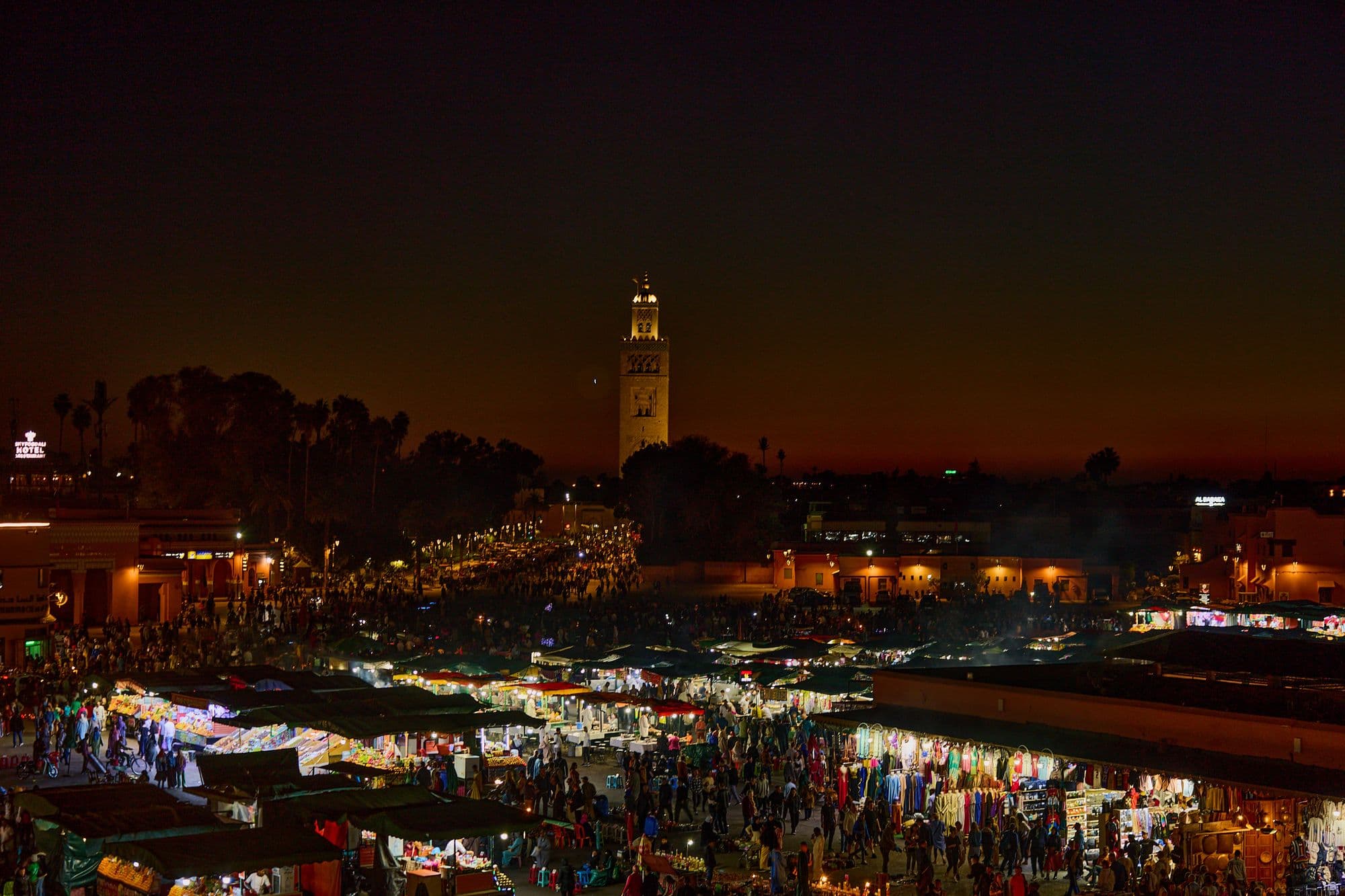
Jemaa el-Fna after dark. The tanners’ quarter in Fes. A blue lane in Chefchaouen at eight in the morning, before the day-trippers arrive. Roman mosaics at Volubilis, gorge walls in the Dades, and the first hour of light on the Erg Chebbi dunes.
 NightlifeJemaa el-Fna, MarrakechThe square empties of juice carts at dusk and refills with food stalls, musicians and storytellers. Go twice — once at five, once at nine.
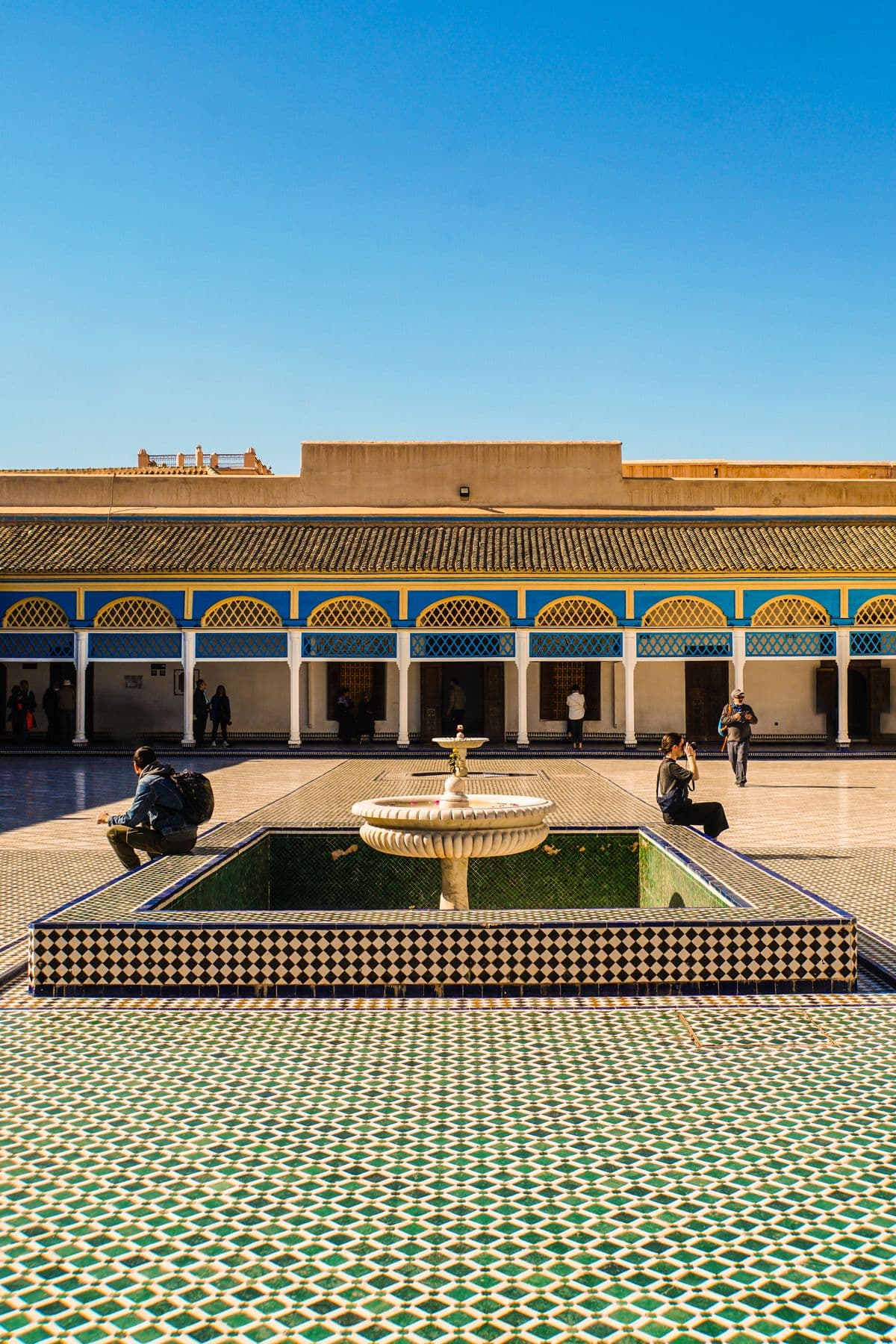 LandmarkBahia PalaceA nineteenth-century vizier’s palace of painted cedar ceilings, zellij tilework and courtyards laid out for an entire household. Early morning, before the groups.
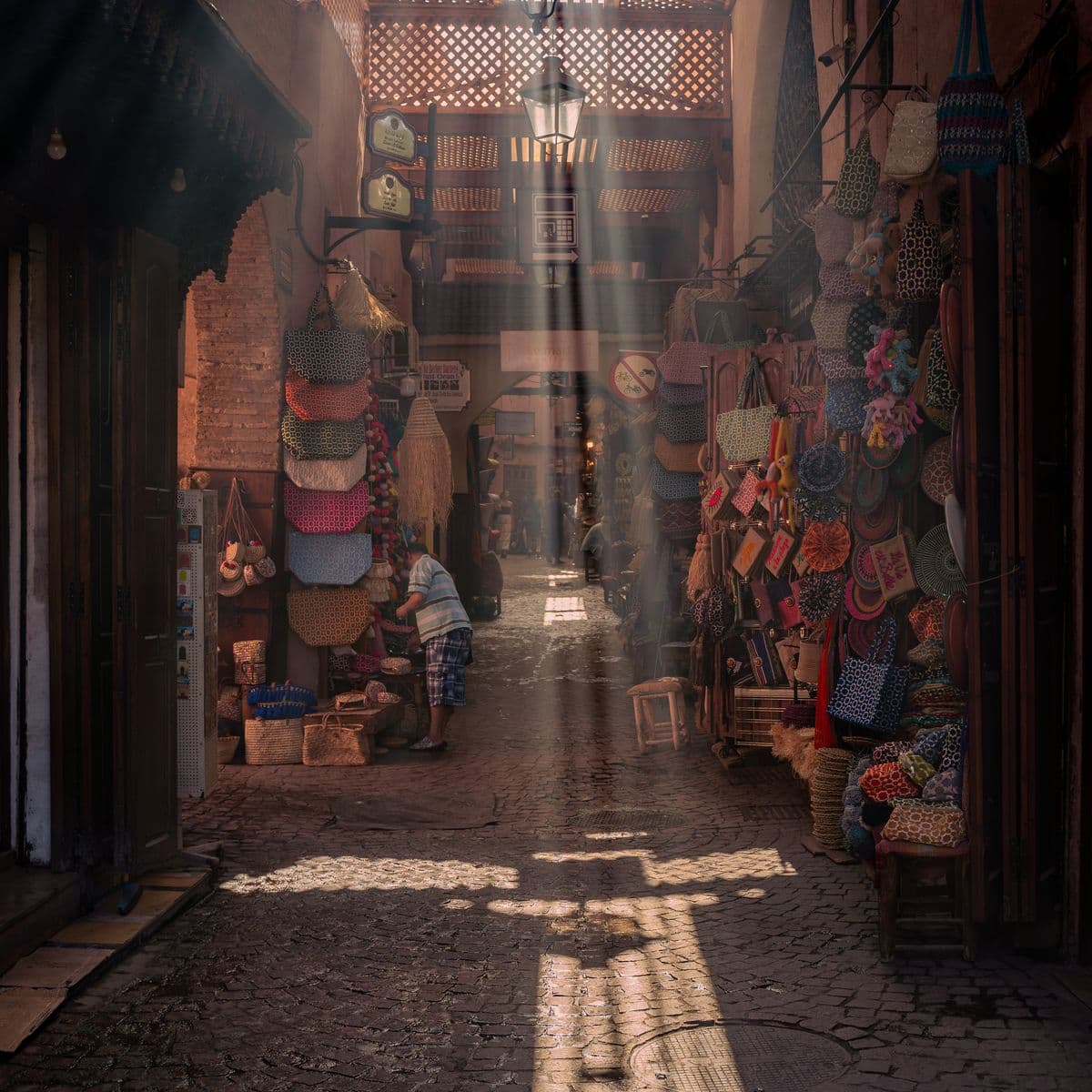 CultureFes el-BaliThe medieval old city: a walled maze of workshops, madrasas and the Chouara tanneries, with the al-Qarawiyyin mosque and university at the middle of it.
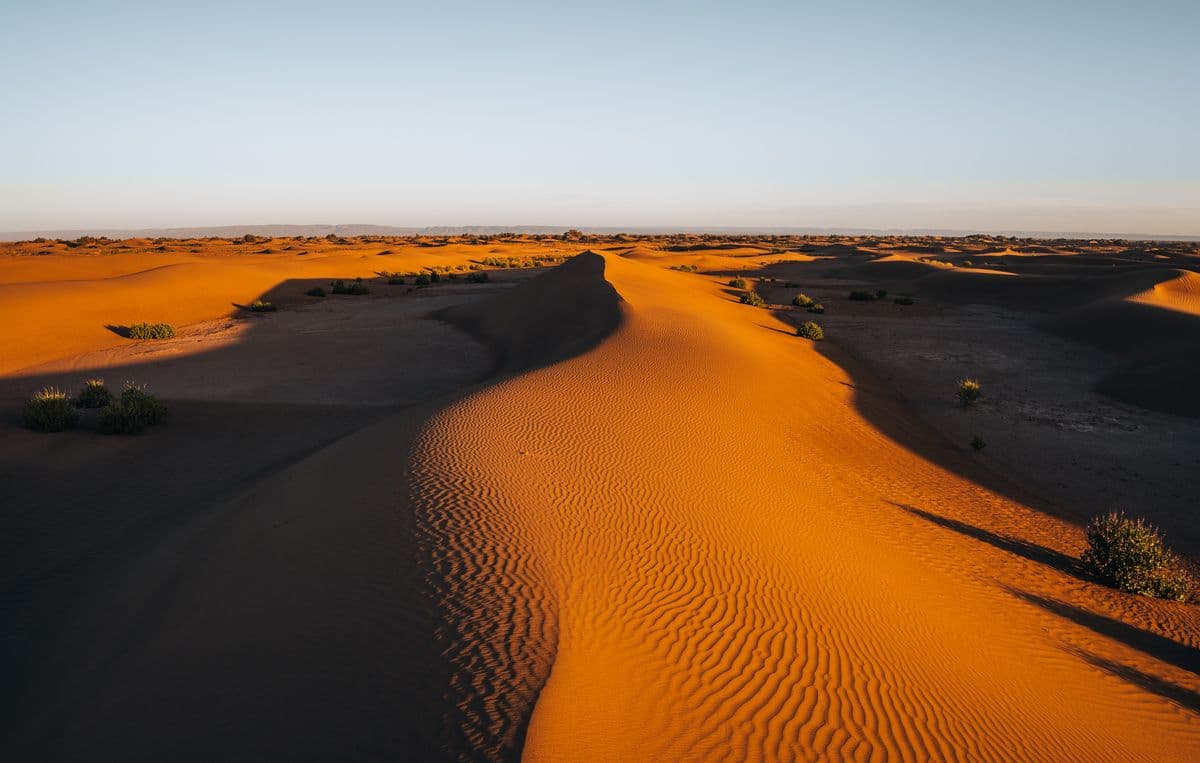 AdventureErg Chebbi & MerzougaThe dune field near the Algerian border, reached by four-wheel drive from Erfoud and then by camel. The camps sit far enough in that the only light after dinner is overhead.
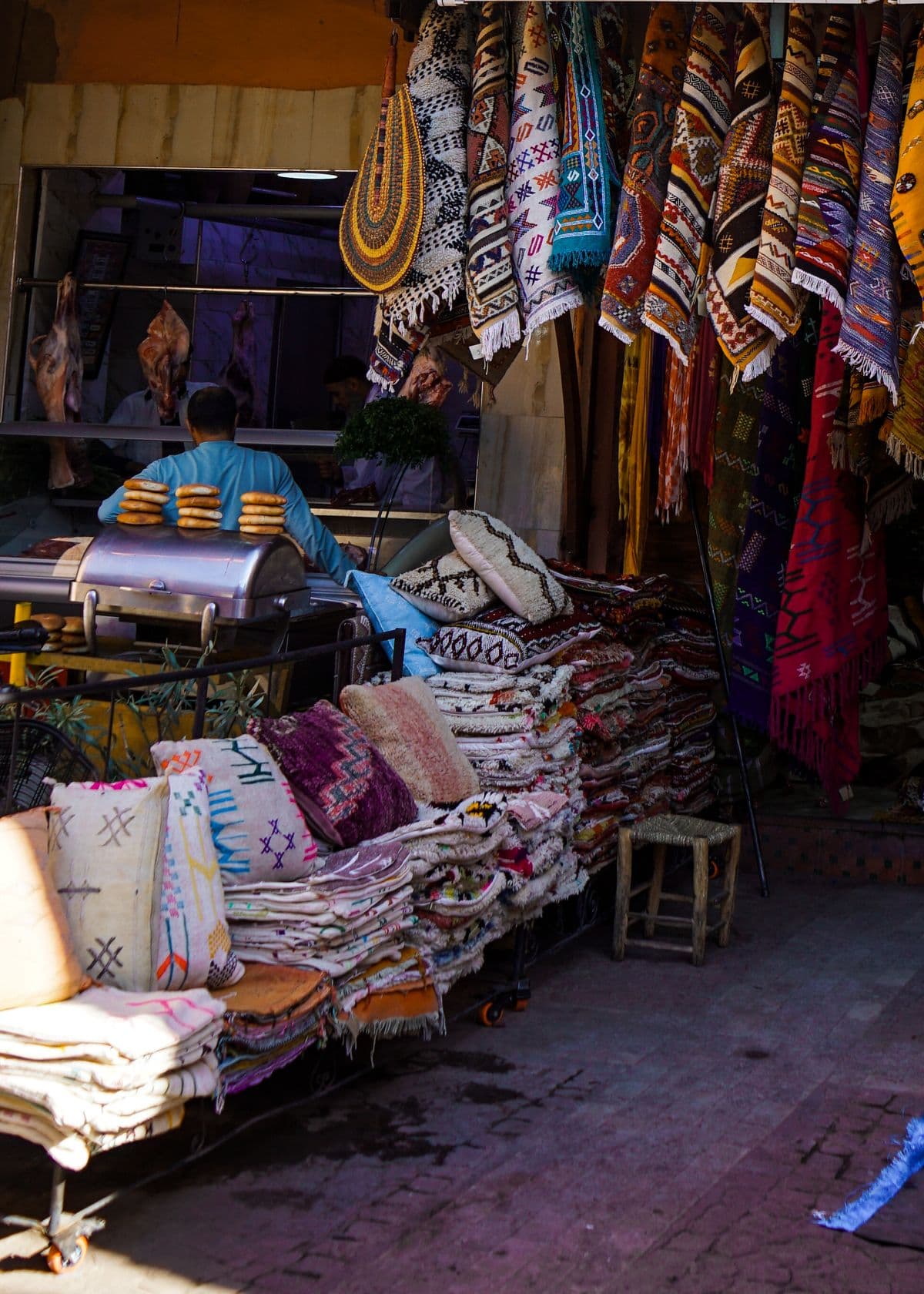 CultureChefchaouenA small Rif town with its medina painted blue from the steps to the shutters, under red-tiled roofs. An hour’s walk covers it, so the light matters more than the itinerary.
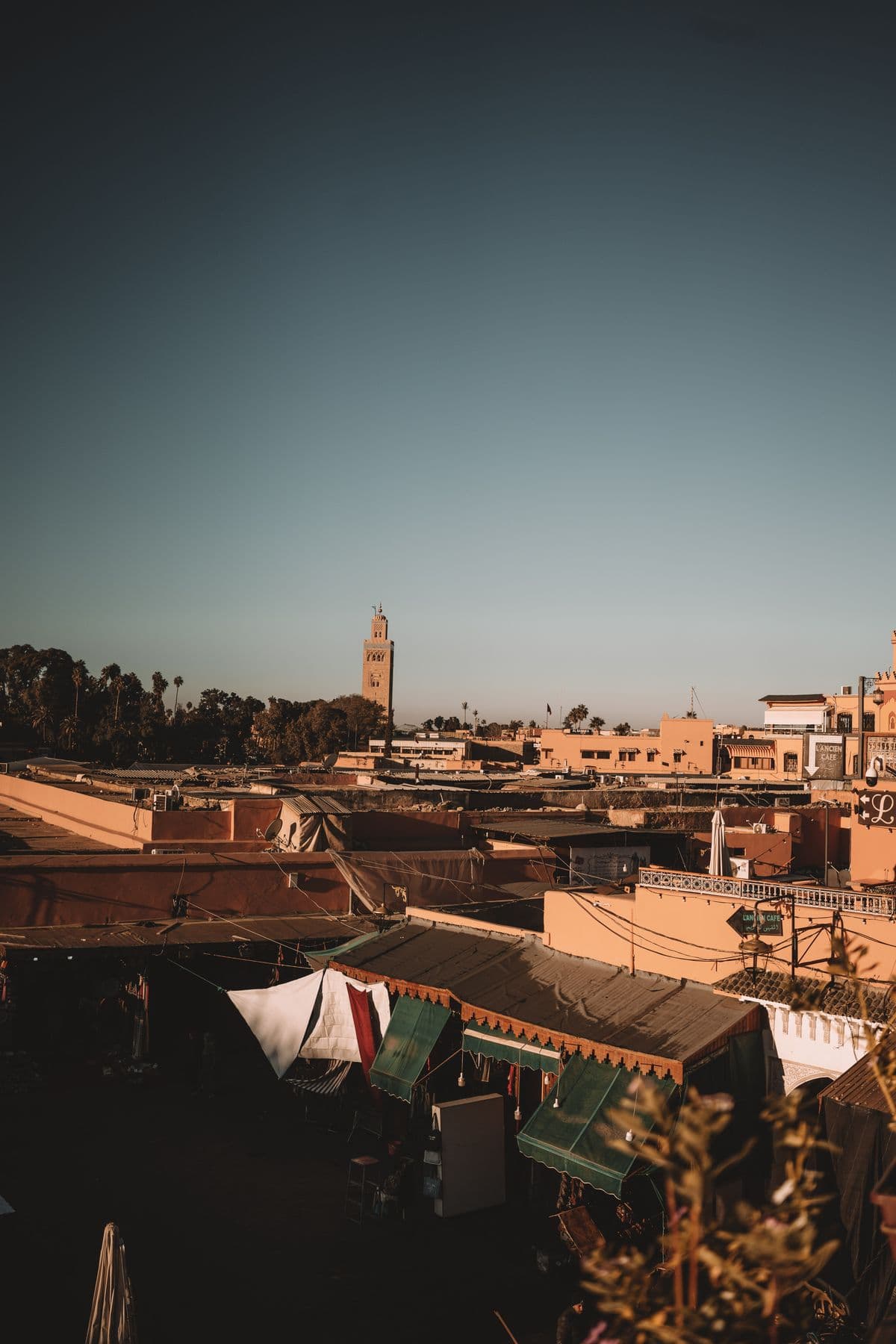 BeachEssaouiraEighteenth-century ramparts over the Atlantic, a working sardine fleet, and enough wind to have made it a kitesurfing town. The medina is small and flat after Fes.
Cinematic Morocco holidays
Morocco CinemaTrip experiences
Ready-made trips
Trips we already run in Morocco
Each one is operated with a private vehicle and an English-speaking guide, and each is a starting point — we rebuild the days around your dates and who is travelling.
Classic cityAgadir Atlantic EscapeThree nights on the Atlantic — the sardine port, the kasbah above the bay, an argan press and a morning among Nile crocodiles.FromAED 2,938pp3 nights / 4 daysDay by day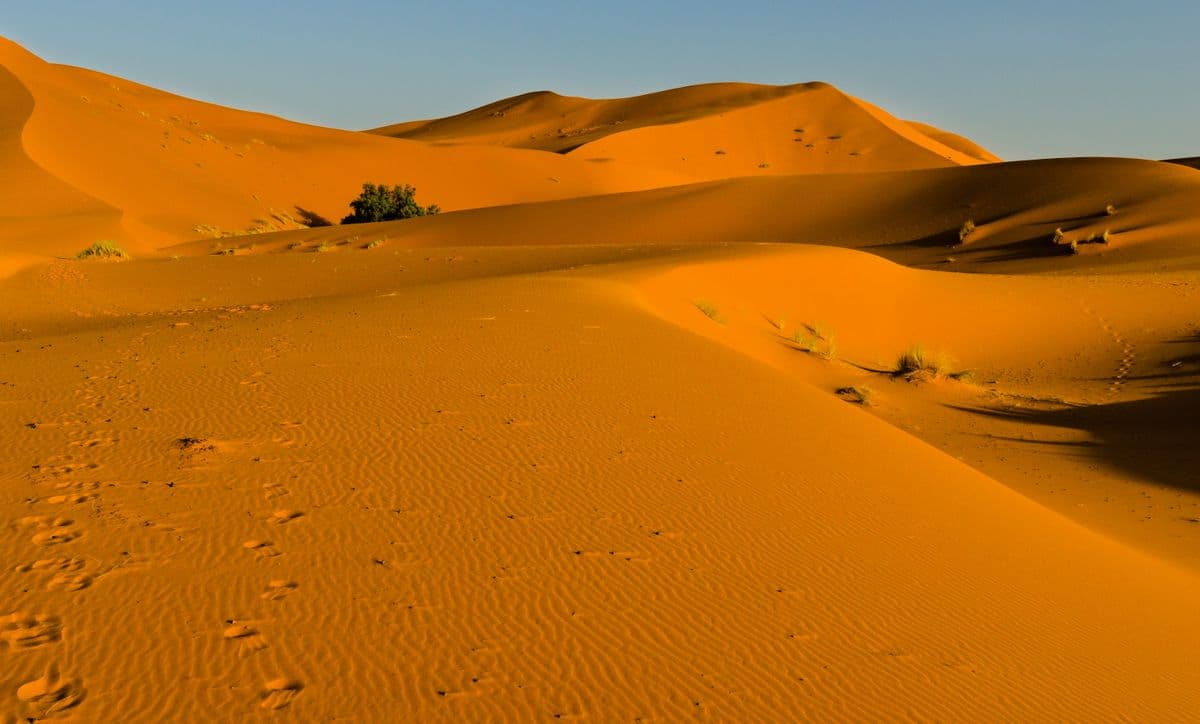 Classic cityAgadir and the Legzira CoastThe Agadir short break with a day added on the coast south at Legzira, where the Atlantic has cut its way through red sandstone cliffs.FromAED 3,930pp4 nights / 5 daysDay by dayMulti-cityTangier, Chefchaouen and FesThe northern circuit — Tangier and Cape Spartel, a night in the blue town of Chefchaouen, then two in Fes. Half board throughout.FromAED 3,398pp5 nights / 6 days · Tangier → Chefchaouen → FesDay by dayMulti-cityImperial Cities and MarrakechCasablanca, Rabat, Meknes and Volubilis, two nights in Fes, then three in Marrakech with a day in the Ourika Valley.FromAED 7,235pp7 nights / 8 days · Casablanca → Rabat → Fes → MarrakechDay by dayMulti-cityImperial Cities with EssaouiraThe imperial-cities run with a ninth day added — four nights in Marrakech, the Ourika Valley, and a day on the Atlantic at Essaouira.FromAED 7,896pp8 nights / 9 days · Casablanca → Rabat → Fes → MarrakechDay by dayMulti-cityGrand Tour of MoroccoTwelve nights right round the country — the Atlantic coast, Marrakech, a camel ride into a Sahara camp, Fes, Chefchaouen and Tangier.FromAED 7,713pp12 nights / 13 days · Essaouira → Agadir → Marrakech → Ouarzazate → Merzouga → Fes → Chefchaouen → Tangier → CasablancaDay by day
Prices shown are the lowest hotel line of each trip. Per person, twin share. Land only — international flights are not included.
Why go
Why Morocco
Few countries change this much in a day’s driving — Atlantic surf towns, imperial medinas, a High Atlas pass and a desert camp, all inside one itinerary. With CinemaTrip, Morocco is not only somewhere to travel through; it is a story filmed as it happens.
- 01
Jemaa el-Fna, Marrakech
The square empties of juice carts at dusk and refills with food stalls, musicians and storytellers. Go twice — once at five, once at nine.
- 02
Bahia Palace
A nineteenth-century vizier’s palace of painted cedar ceilings, zellij tilework and courtyards laid out for an entire household. Early morning, before the groups.
- 03
Fes el-Bali
The medieval old city: a walled maze of workshops, madrasas and the Chouara tanneries, with the al-Qarawiyyin mosque and university at the middle of it.
- 04
Erg Chebbi & Merzouga
The dune field near the Algerian border, reached by four-wheel drive from Erfoud and then by camel. The camps sit far enough in that the only light after dinner is overhead.
Practical
Planning your visit
- Best time to visit
- March to May and September to November. The imperial cities are comfortable then and desert nights are cold rather than freezing. July and August are punishing inland, where Marrakech and Fes regularly pass 40°C, though the Atlantic at Essaouira and Agadir stays mild all summer. Snow closes the higher Atlas passes in midwinter.
- Getting there
- 8h 45m non-stop to Casablanca (CMN)
- Currency
- Moroccan Dirham (MAD)
- Languages
- Arabic and Amazigh; French in business and the cities, English in hotels and tourist areas
- Time zone
- UTC+1 — 3 hours behind the UAE. Morocco moves back an hour for Ramadan
- Entry requirements
- Requirements vary by passport and UAE residence visa status. We confirm current entry rules and handle the application as part of your package.
Entry rules, tourism taxes and health requirements change without notice and depend on your passport. Everything above is confirmed by our operations desk before your booking is finalised.
Gallery
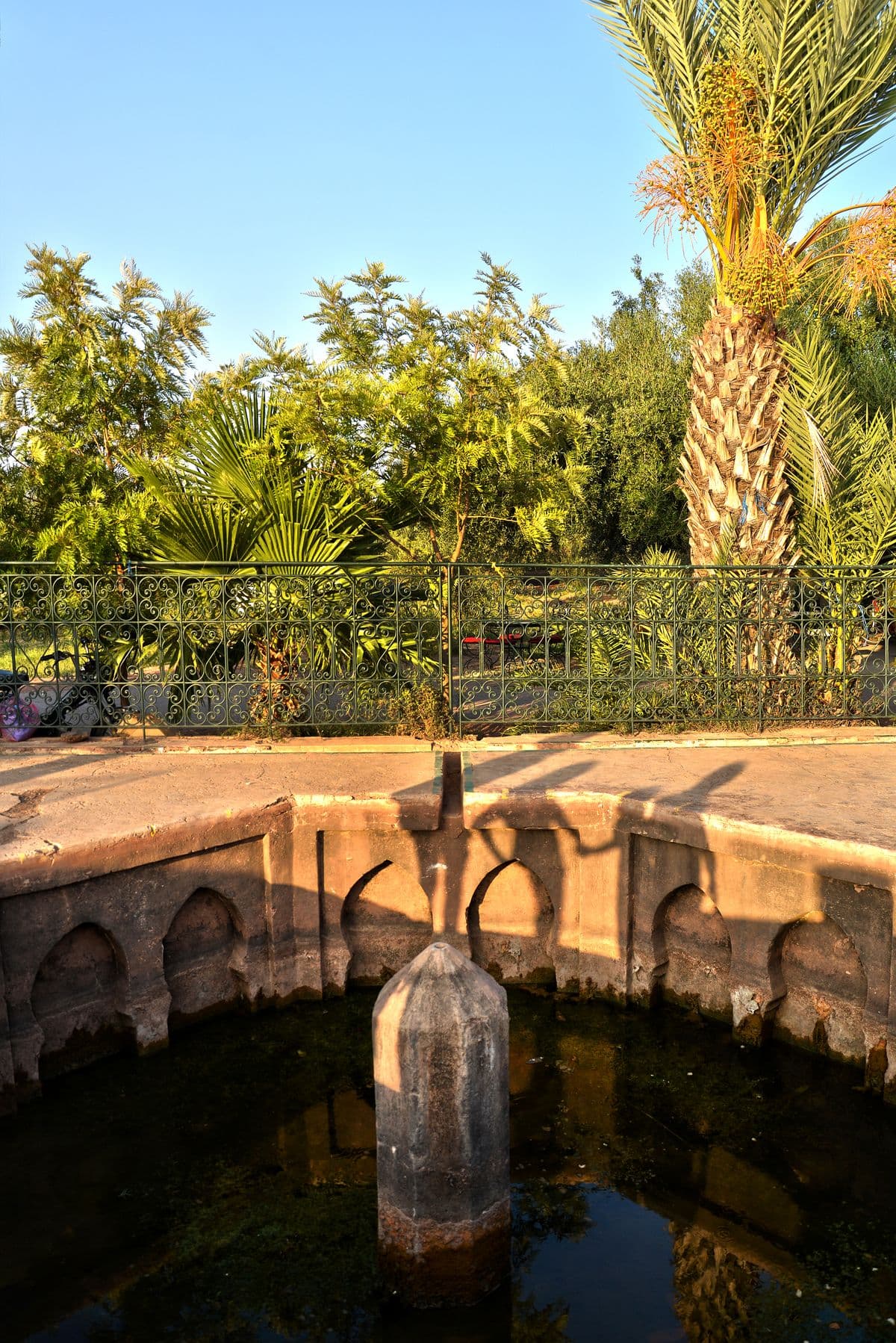
Morocco in frames
Questions
Before you book
Do you offer Morocco tour packages from Dubai?
Yes. Six itineraries are listed on this page, from three nights on the Atlantic at Agadir to a twelve-night loop taking in the imperial cities, the High Atlas and a night in the Sahara. Each is quoted at three hotel grades, and every one of them can be reshaped around your dates and the pace you want.
How long is the flight from Dubai to Morocco?
Casablanca is a little under nine hours non-stop, and Mohammed V airport is where most of these trips begin and end. Marrakech, Fes, Tangier and Agadir normally involve a connection, so the itineraries reach them by road instead — which is why the driving days are built in rather than apologised for.
Do UAE residents need a visa for Morocco?
It depends on your passport and your residency status, and the rules change. Our visa desk confirms what applies to you before you book and prepares the application where one is needed. The ground operator also asks for a passport valid for six months from the date you arrive in Morocco.
When is the best time to visit Morocco?
Spring, March to May, and autumn, September to November. Inland summers are severe — Marrakech and Fes regularly pass 40°C — while Essaouira and Agadir stay mild on the Atlantic all year. If the Sahara is the reason you are going, avoid June to August: the days are extreme and the camps are at their least comfortable.
Can we spend a night in the Sahara?
Yes, on the twelve-night trip. You leave the tarmac at Erfoud for a four-wheel drive across the dunes, then ride the last stretch into the Merzouga camp by camel in time for sunset. It is the only one of these six packages that reaches the erg, and the camp night is the same in all three hotel grades.
Is Morocco a good honeymoon or pre-wedding shoot destination?
It photographs unusually well, which is why we film here. The blue lanes of Chefchaouen, the courtyards of the Bahia Palace, Essaouira’s ramparts in late light and the dunes at Merzouga each give you something a studio cannot. Riads and the desert camp need booking further ahead than city hotels, so tell us early if that is the shape you want.
Also consider
You may also like
Enquire
Plan your trip to Morocco
Tell us your dates and who's travelling. We'll build the itinerary and quote it properly — no templates.